
The psychology of stress: stress in all its forms
I am a clinical psychologist and psychotherapist in Brussels, specialising in stress- and trauma-related disorders.
I am also trained in conscious connected breathing, and I believe that combining psychotherapy with breathwork is the method par excellence for overcoming stress, whether it is a passing stress or chronic stress.
In this article, I discuss the different forms that stress can take and the extremely harmful impact it can have on our health, both psychologically and physically.
What is stress ?
According to the Fédération pour la Recherche sur le Cerveau, stress is : “the set of reactions of our organism when faced with a threatening or novel situation” (2024).
We can already understand from this definition that modern life is full of situations capable of triggering a stress reaction in every individual over the course of a single day.
We live in a society where everything moves very fast, where we constantly have to perform and deal with a multitude of situations in the course of a day, whether at work, in our relationships or within the family.

Stress is a state of mental tension caused by a situation regarded as difficult. It is a natural physiological response that calls on us to mobilise ourselves and rise to challenges.
Faced with such a situation, the organism mobilises and our body then produces energy which often allows us to deal with the situation effectively, because it makes us more alert and more efficient.
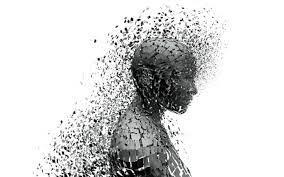
Generally, once the situation has passed, the body returns to its normal state.
However, if we are confronted too often with difficult situations, or if we have been confronted even once with a situation that was too stressful or traumatic, our body remains permanently mobilised, even in the absence of danger, and can no longer return to normal.
It ends up confusing and analysing every situation as potentially dangerous, and that is the entry into a state of chronic stress in which it is no longer possible to relax.
We are then trapped in a negative spiral, where our brain goes into overdrive and where we feel constantly overwhelmed. This causes incessant rumination, and we end up partly losing our sense of reality.
Stress is a complex phenomenon which sets off a chain of reactions in our organism. At its root it is therefore an adaptive mechanism which enables the organism to mobilise quickly when faced with a difficult situation.
However, if this response is called upon too often, we can develop chronic stress, in which the organism then mobilises in an inappropriate way but without any stressor.

Shall we talk about it?
I am a clinical psychologist and psychotherapist in Brussels, specialising in stress- and anxiety-related disorders.
What happens in our body during stress ?
Faced with a stressful event, our organism swings into action and triggers hormonal responses that promote alertness. Adrenaline is released, with an increase in heart rate and blood flow, which puts us in a state of tension and prepares our body to react effectively.
This is the activation of the hypothalamic-pituitary-adrenal axis, which at the very end also releases cortisol, the stress hormone par excellence.
Acute stress is mobilising: it triggers a reaction of our sympathetic nervous system and prepares us for an appropriate response in record time. The action may be flight, fight or freeze, as Claverie and Canini note in their 2023 article, “La réponse biologique au stress”.
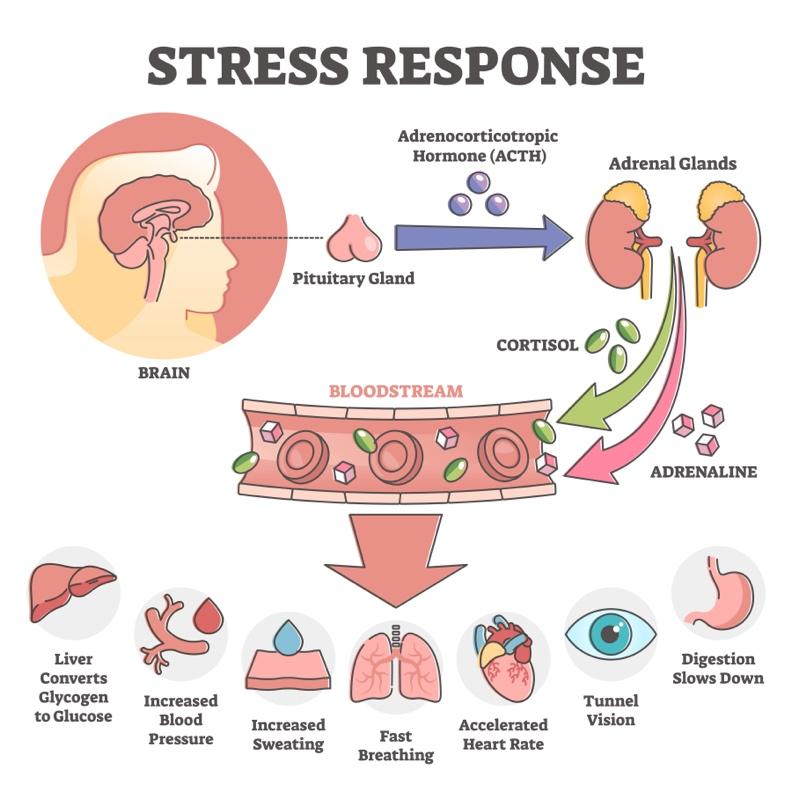
Flight and fight are generally regarded as adaptive responses which allow the body to release stress. The most problematic response in humans is freezing, unlike in animals, which will show a trembling response once the danger has passed, allowing the stress to be discharged.
Humans do not have this possibility: if we are frozen, the stress then remains lodged in the body, creating hormonal imbalances that can persist. That is the whole problem with repeated stressful situations, with chronic stress.
What is chronic stress ?
According to the Centre for Studies on Human Stress (2024), chronic stress stems from prolonged and repeated exposure to situations that make us secrete the stress hormone : cortisol.
So what are the effects of stress on the body ?
The repeated production of cortisol, and its dysregulation, is extremely harmful to our organism and can lead to heart disease, excessively high blood pressure, high cholesterol, as well as diabetes or depression.
Some doctors, including Dr Gabor Maté, go much further, describing prolonged stress situations as genuinely traumatic.
In his book “When the Body Says No” (2019), he explores the role of prolonged stress, in particular childhood trauma, where the child is necessarily frozen, because dependent, and which in adulthood can bring about maladaptive defensive behaviours leading to all sorts of illnesses such as arthritis, cancer, diabetes, cardiovascular disease, irritable bowel syndrome and multiple sclerosis.

Indeed, the body holds on to stress and can then, later, bring about all these illnesses.
The eminent trauma specialist Dr Bessel Van der Kolk, in his book “The Body Keeps the Score” (2021), writes about trauma as ultimately being exposure to intense stress during catastrophic events or a prolonged stressful situation, and likewise underlines its extremely harmful effects on body and mind.
We cannot end this section without addressing the illness of our century, burnout, which affects more and more people across the world.
What is burnout ?
According to an AXA study in 2022, more than half of Belgians (54%) experienced excess stress in the previous year, and the study links this excess stress to the world of work. Likewise, according to the journal “Courrier International”, burnout in Belgium reached 37.2% in 2022.
The term burnout was used for the first time in 1969, by Harold B. Bradley in his article “Community-based treatment for young adult offenders”. However, the first theoretical thinking on the subject was introduced by Herbert Freudenberger, in 1974, describing the loss of motivation among the staff of a detox centre. It was Christina Maslach, a social psychologist at Berkeley, who gave the subject a scientific grounding, contributing to the popularisation of the concept. In particular, she helped to create a burnout measurement scale in 1981.
According to the World Health Organization (WHO), burnout is characterised by “a feeling of intense fatigue, of loss of control, and of an inability to achieve concrete results at work”.
Burnout is a progressive illness which is generally developed by resilient individuals, capable of enduring pressure over time.
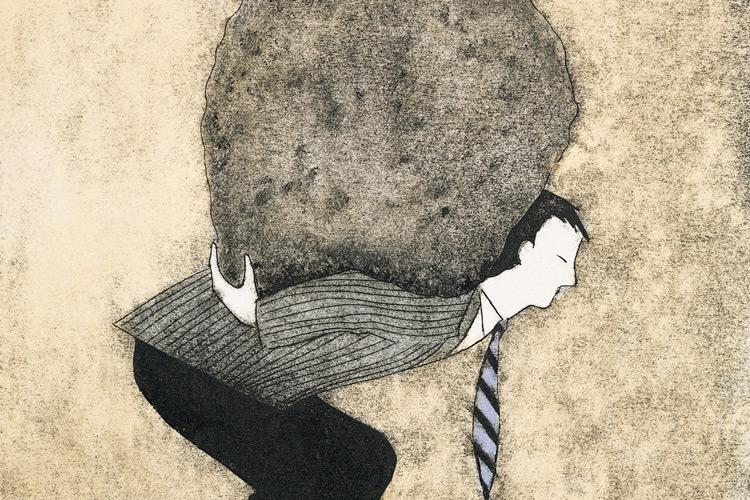
Burnout is a collapse of psychological and physical resources, because the person concerned has struggled for too long in an adverse environment. A person in burnout is always in a state of chronic stress.
According to a report by the European Agency for Safety and Health at Work, in Europe one in two cases of absence from work is caused by chronic stress.
The most common symptoms of burnout are :
- Persistent fatigue ;
- Sleep disturbance;
- Changes in weight ;
- A permanent feeling of tension and alertness ;
- Back pain and muscular tension ;
- A wish to be alone :
- Irritability and a permanent feeling of anger ;
- Difficulty concentrating ;
- Self-esteem problems, with a huge drop in self-confidence ;
- A permanent feeling of powerlessness ;
- Suicidal thoughts in the most serious cases.
If you are experiencing these symptoms, it is essential to consult a psychologist-psychotherapist who can listen to you, assess your situation and help you find solutions as quickly as possible. In the most serious cases, it is also essential to put in place medical treatment with the help of a psychiatrist.
How can stress be tackled ?
Consulting a psychologist-psychotherapist
If you feel that your level of stress is too overwhelming, or if it is chronic or post-traumatic stress ; then it is essential to consult a psychologist. The psychologist will be able to assess your level of stress and to understand its origins with you.
Then it seems important to put in place strategies and lifestyle changes that will allow you to adapt better and to build resilience to stress in the course of a psychotherapy.
Excessively high stress can be very invasive and can spill over into and create problems in every area of your life, which is why it is important to seek help as soon as the first symptoms appear.
Physical activity
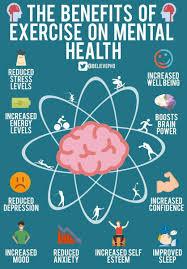
Physical exercise is an essential natural method for combating stress.
Physical activity releases serotonin, a hormone that produces a feeling of relaxation and well-being, as well as endorphins, which have a relaxing action and allow stress to be tackled effectively. Physical activity also makes it easier to fall asleep and considerably improves the quality of sleep.
Conscious breathing, or “Breathwork”.
In recent years, many studies have shown the effectiveness of breathing techniques for combating stress.
It is essential to breathe correctly, because poor breathing is very strongly correlated with stress. Many people breathe too fast, too shallowly, or through the mouth.
James Nestor, in his bestseller “Breath: The New Science of a Lost Art” (2022), demonstrates the extremely harmful effects of poor breathing on our level of stress.
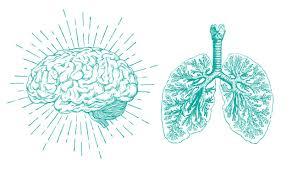
Poor breathing increases the activity of our parasympathetic nervous system, the system that puts our organism into a state of stress, and this can happen even in the absence of a stressor. This can lead to the development of numerous psychological and physical illnesses.
Conscious breathing is the method of choice for regulating the balance between our sympathetic and parasympathetic nervous systems. It allows our body and mind to come out of the survival mode in which they can remain frozen under the effect of stress.
It is an indispensable complement to therapy in states of stress or trauma, because words alone cannot overcome trauma, which is lodged in our body. What has been frozen in the body can only be released by a method that also focuses on the somatic.
Focusing on psychological and physical states, through the combination of therapy and conscious connected breathing, makes it possible to emerge from even the most chronic states of stress in an extremely effective way.
People under chronic stress often become insensitive to the pleasures of life; they feel like strangers to their own body and their own life, and become passive witnesses of their own existence. Bringing the body into the therapy makes it possible to restore this sensitivity and to come out of the numbness brought about by prolonged stress.