
Clinical psychologist and psychotherapist specialising in depressive disorders
Depression can arrive at any moment in life. It often appears for no reason, and plunges the person suffering from it into a world of unsettling strangeness.
It often sets in insidiously with its train of symptoms : dark thoughts, loss of pleasure in everyday activities, difficulty getting up in the morning, disturbances of sleep and of appetite, but also social isolation.
Unless it emerges in the wake of a specific event : the loss of a loved one, an accident, a trauma, depression is often connected to the past.
When it declares itself in response to a specific event, we speak of reactive depression, which generally resolves by itself once the emotional load has been digested.
However, if it persists over time, we then speak of major depressive disorder. In this case the causes are always more complex and it is then imperative to begin a psychotherapy.
Depression has often been described as an “illness”, as though it were ultimately one inevitability among others, hereditary and curable only by taking medication, which often proves necessary for many years.
Even if medication does seem indicated in the most serious cases, this definition leaves little hope to those affected, because it opens up no possible path to recovery.

Shall we talk about it?
I am a clinical psychologist and psychotherapist in Brussels, specialising in depressive disorders.
Where does the suffering come from, and why this suffering ?
Too few mental health professionals actually ask these questions, as though the history of the person who is ill mattered little.
And yet one does not recover from depression by denying its complexity and without understanding its origins.
What is depression ?

Depression was once called melancholia and was defined as : “A psychic state characterised by a mood disturbance in the direction of a diminution of vital drive, with sadness, ideomotor and psychomotor slowing, psychic and physical pain, and neurovegetative disturbances.” (Kraepelin, 1889).

This definition nevertheless remains entirely current and is not far removed from present-day definitions such as that of the World Health Organization (WHO), which describes : “a persistent sadness or a lasting loss of the ability to feel interest or pleasure in activities that previously provided them” (2024).
Still according to the WHO, “the depressed mood must be present for most of the day and occur almost daily for at least two weeks. People with depression may suffer from sleep disturbance and fluctuations in appetite. They may also have low self-esteem or suicidal thoughts and feel hopeless about the future. Fatigue and difficulty concentrating are also frequent symptoms”.
The loss of vitality and of pleasure in everyday life is at the heart of the problem. The individual is confronted with significant anxiety, a sense of failure and powerlessness, fatigue, and intellectual slowing.
It is estimated that 10% of the world’s population is affected by depression.
According to a study by Prévot (2022), between roughly 1 and 1.7 million people in Belgium will experience depression during their lifetime.
Depression is often difficult to identify

Depression can take different forms. We often imagine the depressed person as passive and inert, prostrate, looking at the world around them with indifference and detachment.
Yet depression can be masked: it is then expressed through great agitation, where the person is perpetually in motion because overwhelmed by anguish or anxiety.
It can manifest itself through outbursts of anger and aggression, or through the use of substances such as alcohol, medication or drugs. Many people are unaware that they are depressed, or do not want to admit it.
One of the serious forms of depression is bipolar disorder, which is characterised by an alternation between states of euphoria and agitation and periods of dejection and withdrawal.
All these configurations sometimes make it harder to identify.
Where does depression come from ?
In the course of our lives, we all face difficult events that call on our capacity to adapt and to be resilient.
Depression can be linked to the loss of a loved one, to difficult living or working conditions, to persistent stress, to failures, to a painful or traumatic event, to bereavement.
When it comes to the sadness brought about by these events, we are not all equal.
Not everyone experiences these events in the same way, and this is connected to each person’s resources. Each person’s degree of resilience has its origins in our past.
Some will live through this difficult moment without feeling completely overwhelmed. Even when sad, they will be able to continue functioning more or less normally in most areas of their life until the storm passes.
Others will feel far more affected in their daily lives, to the point where the emotional suffering becomes more and more problematic and gradually invades every area of life.
Often the significant event will awaken old memories, other difficult moments in life, plunging the individual into deep distress.
We are not all equal in the face of depression, because we do not all have the same past.

Shall we talk about it?
I am a clinical psychologist and psychotherapist in Brussels, specialising in depressive disorders.
Depression has its origins in childhood.
Inequality in the face of depression very often depends on the childhood we lived through and on the quality of our relationships with parental and family figures.
An individual who grew up in a secure environment during childhood, and who was therefore able to acquire solid foundations to rely on, will be better able to get through certain more difficult moments without collapsing.
These are families where communication flows freely, where one can express one’s emotions without making the other members of the family group anxious, and where difficulties are seen as part of life, which does not undermine confidence in the future.
This everyday regulation makes it possible to adjust one’s emotional experience without being overwhelmed and to find solutions alone while also knowing how to ask for help when needed.
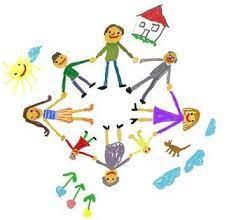
By contrast, an individual who grew up in a less secure family, where there were more secrets, where the parents were themselves more anxious and preoccupied, where communication about negative emotions was not encouraged, will find it harder to regain hope in the face of a depression-inducing event.
In this case, the sadness experienced can go as far as collapse and lead to what is commonly called, in psychoanalysis, melancholic depression.
This is an inability to mourn: the loss is unbearable for the subject and then threatens their very integrity.
Depression, a transgenerational inheritance
Depression can also be transmitted from one unconscious to another. We all come from two people, each with their own history. The history of one or both parents may have been a difficult one : war, trauma, bereavement, a family secret…
The child senses the negative emotions but also understands that one is not allowed to speak of them, because it makes the adults uncomfortable.
This suffering is not expressed directly within the family, either because the parent is not really aware of it, or because they wish to protect the child from an emotional burden they imagine to be far too heavy to carry.
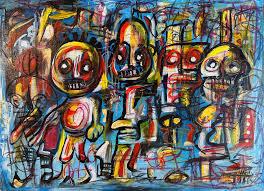
The parents then minimise their own suffering, even though they bear its scars, and very often it is passed on to the next generation in a masked form.
The following generations then carry a melancholic burden of which they understand nothing and from which they cannot free themselves.
That, quite simply, is the heredity of depression. You do not need a gene to pass on suffering. This is why it is imperative to look at the transgenerational aspects of depression when you do not know where it comes from.
How can one come out of depression ?
The main treatment for coming out of depression is psychotherapy. It is essential in order to treat the problem at its root and to prevent the risk of relapse.
Depression is an invitation to look at one’s past in order to be able to change one’s present.
What needs to be identified is whatever keeps one in sadness and prevents one from regaining confidence in the future.
In-depth work on the child and the adolescent one once was, on one’s own family and one’s transgenerational inheritance, is a real opportunity to shed the weight of the past in order to push away that feeling of heaviness and to free oneself from it for good.
Work on the past always leads back to work on the present. Along the way, one realises that certain choices belong to the past, and new arrangements in life come into view. One is then free to put in place new projects or new habits, more in keeping with one’s deepest aspirations.
Therapy for depression, even though it undoubtedly requires effort, is a therapy of renewal which can, far beyond one’s expectations, breathe genuine life back into a person and make it possible to build the future on authentic, solid and lasting foundations.