
Psychologist specialising in eating disorders
Eating disorders are fairly widespread, particularly among younger people, even though part of the adult population also suffers from these disorders, which generally begin around adolescence but can persist into adulthood and then become more chronic. These disorders manifest themselves in an obsession with food, weight and appearance.
According to the website belgiqueenbonnesante.be; 11% of the adult population shows signs of eating disorders (compared with 8% in 2013 and 7% in 2018).
These signs are more frequent in the 18-29 age group and more frequent among women than among men.
Also in Belgium, it turns out that 40,000 hospital stays each year involve an eating disorder.
Shall we talk about it?
I am a clinical psychologist and psychotherapist in Brussels, specialising in food-related disorders (eating disorders)
What are eating disorders?
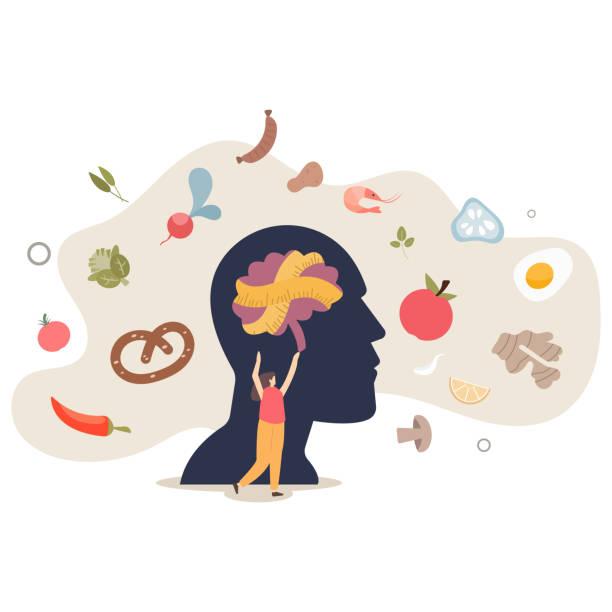
Eating disorders are extremely disabling conditions. They organise the person’s whole life and are often linked to underlying depressive or anxiety problems, presenting, in the most serious cases, a risk of suicide, so powerless do these people feel to control their behaviour.
They are indeed characterised by a particular relationship to food which is associated with great psychological suffering and which is often chronic. If they become entrenched over time, the consequences for the person’s health can prove dramatic. They are also extremely isolating, which contributes still further to the psychological distress.
Definition of eating disorders
The WHO (World Health Organization) defines eating disorders as follows:
“Eating disorders, such as anorexia nervosa and bulimia, involve abnormal eating and an obsession with food, as well as prominent concerns about body weight and shape.”
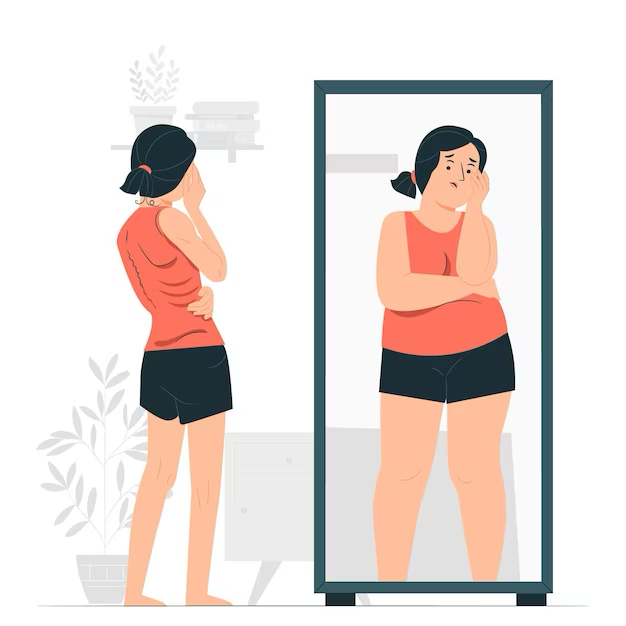
They bring about psychological and somatic disturbances characterised by a distorted representation of the body, influenced by social pressure and by negative emotions such as anger, shame and self-disgust.
The most common eating disorders are anorexia nervosa, bulimia and binge eating.
What causes eating disorders?

The causes of eating disorders are unclear and poorly defined. Some put forward the genetic hypothesis, which nevertheless seems unconvincing since no specific gene has been discovered. It would seem instead that the relationship to food can be disturbed at the family level and that these habits are then passed on from generation to generation, even if the form may change.
We often see entire families in which obesity is ever-present. These are often families in which food occupies an important place within the family dynamic. Family relationships are then often organised around food, to the detriment of other activities.
What is most striking in this type of disorder is above all the difficulty of experiencing emotions and regulating them.
As with any compulsive behaviour, there is a strong tendency to short-circuit emotions, either by “eating them”, as in bulimia or binge eating, or by setting them aside entirely through absolute controlling behaviour, as in anorexia.
By strictly controlling their food intake, people with anorexia also feel that they can control their emotional world. The obsession with food, whether devoured or refused, likewise allows the person’s mental and therefore emotional world to be controlled, because the relationship to food then takes up all the space.
The origins of eating disorders.
Eating disorders generally have their origins in childhood, even if they usually only manifest themselves in adolescence or adulthood.
These illnesses above all reveal developmental difficulties in childhood, very often from the first months of life. The origin may lie in problems linked to the construction of identity, to forms of insecurity, to dysfunctions in the parent-child relationship, to intergenerational trauma, or indeed to physical or sexual abuse.
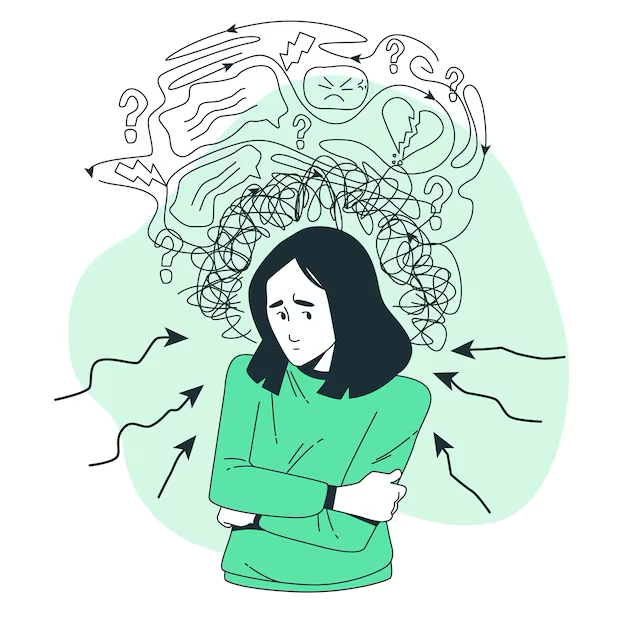
There are generally latent conflicts with attachment figures from whom the person finds it hard to separate, for reasons specific to each family history.
Every configuration is possible, often also linked to the psychological difficulties of the parental figures themselves, arising from their own histories.
As a result, the move towards autonomy that belongs to adolescence becomes complicated, and the person sabotages themselves through eating disorders, because relational and psychic conflicts cannot be expressed.
The dependence/autonomy conflict crystallises around food, and as the illness develops it locks the person into an established dependence, isolating them more and more from others and from themselves.
The depressive problem is central to this process. In this case the depressive tendency is linked to the impossibility of detaching oneself mentally from parental figures without the risk of psychic collapse.

The autonomy necessary for building an adult life is experienced as abandonment, and as a result the path towards a stable adult identity is thwarted. Food, whether in excess or in absence, then becomes a form of obsession, symbolising this impossibility of becoming autonomous and undermining the person’s identity.
A way of life is then organised, apart from all human relationships. Engaging in human relationships risks making the person relive a threat of abandonment. Food, as a substitute, gives the illusion that everything can be controlled.
From this perspective, eating disorders are to be understood as an unconscious attempt to control intense feelings such as anxiety, insecurity and often guilt.
Behaviours affecting food intake, whether frenzied deprivation of food or, conversely, bulimic excess followed by vomiting, belong to the category of self-soothing processes, similar to addictions. They therefore mark the failure to constitute a stable identity. A sign of deep anxiety and of a failure of the capacity for self-regulation, they anchor the person in a problem that rapidly becomes uncontrollable and terribly life-threatening.
What are the different types of eating disorder?
Eating disorders can take different forms. According to the DSM-5, the broad categories are:
- Anorexia nervosa.
- Bulimia.
- Binge eating disorder.
- Pica.
- Orthorexia.
- Rumination disorder.
Anorexia nervosa

Anorexia nervosa is an eating disorder which most often arises at puberty. It manifests itself in a categorical refusal to eat normally over a long period, in order to lose weight or to avoid gaining it (Inserm, 2024). It is most often triggered in adolescence.
It is characterised by a specific way of eating, either through total refusal, or through restriction or the avoidance of certain foods.
It may be accompanied by vomiting, the use of laxatives, or intense physical exercise to control weight. The person’s body mass index is generally below 17.5. Growth is often slowed in adolescent girls. Body perception is distorted: the person is in denial about how thin they are and always sees themselves as fat.
It occurs more particularly in people with a tendency towards perfectionism, generally with low self-esteem and anxious or depressive traits. Around 40% of patients with anorexia suffer from psychiatric disorders (Inserm 2024).
It often begins at puberty, its first manifestation being a restrictive diet. This continues, bringing about ever greater restriction. Traumatic life events such as separation, bereavement, or physical or sexual trauma are frequently found before the onset of the eating disorder.
The anorexic phase lasts on average between a year and a half and three years, but can extend to as long as five years. After five years, two thirds of patients have recovered. For the others, we speak of chronic anorexia nervosa. In the long term, half of those treated for anorexia nervosa in adolescence recover, a third improve, 21% suffer from chronic disorders and 5 to 6% die (Inserm, 2024).
Bulimia
Bulimia is an eating disorder characterised by the compulsive consumption of a very large quantity of food in a minimum of time. The person very quickly loses control over their food intake; it is a compulsive behaviour that the person cannot control. There follows a feeling of unease, followed by compensatory behaviours aimed at controlling weight gain.

In the vast majority of cases, people make themselves vomit immediately after the episode, and also compensate by taking laxatives or appetite suppressants, by fasting, or through high-intensity exercise.
Binge eating disorder
Binge eating resembles bulimia in every respect, but it is not accompanied by compensatory behaviours. The person affected therefore ends up, in most cases, overweight or morbidly obese.
Pica

This is an eating disorder that consists of eating non-edible products which are not foodstuffs (paper, earth, clay, etc.).
Generally, what people with pica eat does not put them in danger. It can happen that what they eat causes complications, such as constipation, blockages of the digestive tract, lead poisoning from having ingested flakes of paint, or a parasitic infection after having ingested earth (The MSD Manual, 2024).
This behaviour generally does not disturb the individual’s social functioning, because these behaviours most often take place out of sight. However, this disorder is never isolated and most often reflects an underlying psychiatric illness such as autism, intellectual disability, schizophrenia, severe depression, and so on.
Orthorexia
This is a compulsive behaviour characterised by an obsession with healthy food. The person spends most of their time planning their diet in order to reduce to excess their intake of fat, salt, sugar, or any other food that might be regarded as harmful to their own health. This disorder is accompanied by an equally rigid programme of physical exercise. It is a progressive disorder, the person following ever more constraining dietary restrictions which can lead to extreme thinness, total social isolation, and often to a chronic depression of which the person is not really aware.
Rumination disorder
This is an eating disorder characterised by the regurgitation of food shortly after a meal, which the person chews, voluntarily or otherwise, and swallows again. It can have dramatic consequences for the person: weight loss, dehydration, electrolyte imbalance. It can be linked to emotional deprivation, to ill-treatment, to a mental illness or to a physical illness. This illness, which usually develops in childhood, can persist into adulthood and lead to social isolation.

Shall we talk about it?
I am a clinical psychologist and psychotherapist in Brussels, specialising in food-related disorders (eating disorders)
The treatment of eating disorders.

They must be taken very seriously and treated as quickly as possible after detection, because they are linked to very significant psychological distress. Suicide attempts are frequent among people suffering from this type of disorder.
Anorexia is the condition associated with the highest mortality rate; some studies estimate that 10% of patients die within the 10 years following the onset of the disorder.
In the most severe cases, hospitalisation in a specialist centre is essential. Hospitalisation cannot take place in a general psychiatric unit but must be in a specialist centre, given the specific nature of the disorder and its resemblance to addictive disorders. Indeed, the phenomenon of compulsion often undermines the will to get better, and very often the people affected do not want to come out of this spiral and refuse treatment.
A multidisciplinary approach is essential. What is needed is:
- Medical follow-up with a specialist doctor to monitor and make up for the deficiencies caused;
- A nutritionist to support the patient and re-educate them towards a balanced diet.
- In the most serious cases, the introduction of medical treatment and psychiatric follow-up.
- Psychotherapy with a psychologist specialising in this type of disorder.
- In young people, individual treatment must be accompanied by family interventions and sometimes group work.
Psychotherapy for eating disorders.
Psychological treatment must operate on two levels: behavioural and psychotherapeutic. Behavioural in order to put an end to harmful eating habits, and psychotherapeutic in order to address the associated psychological suffering.
Psychotherapy with someone trained in this type of disorder is crucial. Beyond the manifest symptoms, it makes it possible to explore the underlying causes driving the eating behaviour.
It involves retracing the patient’s history and understanding the key moment when the disorder began to manifest itself, as well as grasping how it developed.

Creating a relationship of trust in which the patient can feel sufficiently supported is fundamental.
Every symptom has a function. Eating disorders are defences against a psychological suffering that has become unbearable, and every history is unique. In any case, at the root of the disorder there is always a predominant anxiety linked to significant depressive experiences.
The person will need to be helped to piece together the thread of their history and to understand the existential unease at the root of the disorder. Whether it is a matter of difficulties in the family of origin, of trauma, of a transgenerational dynamic or a combination of all these factors; treating the underlying anxiety and depression will make it possible to break the mechanisms of compulsion, to take part in life again, to rediscover satisfying social relationships, and to restore the self-esteem and self-love that have been lacking. The key to treatment is to bring to light what the compulsion of the eating disorder was seeking to annihilate.
A somatic approach such as meditation, Breathwork or EMDR can also support this work.